Moving Again Sooner, Right Here in Lancaster

With more than 12,600 knee replacements completed, NanoKnee surgeons regularly see their patients:

  • On their feet within 30 minutes of the procedure
  • Back home about two hours after surgery
  • Returning to sports and exercise, many higher-impact activities among them, as their surgeon clears them

The size, position and alignment of your implant are worked out in advance on a digital 3D replica of your knee, created from your CT scan.

How does 3D surgical planning work? See for yourself →

Recovery Results From Our Patients

Figure What it measures
65 minutes The median time to a first walk after surgery in a group of 876 NanoKnee patients. Half walked sooner than 65 minutes.
96% The portion of patients walking within two hours of their operation; 88% walked within 90 minutes.
125° How far the median patient's knee bent in the recovery unit (720 patients); the middle 50% ranged from 120° to 134°.
Same day Your NanoKnee knee replacement is outpatient, so the rest of your first day is spent at home.

Only 5.6% of total knee replacement patients walked on the day of surgery in a prospective study across 19 hospitals, and 70% had done so by the end of the following day.[15] NanoKnee figures are medians and proportions from our post-anesthesia recovery records, counting patients with data for each measure (walking: 876; flexion: 720). Individual results vary.

Schedule A Consultation

(740) 675-8061 Contact Us
Contact us media

Comparing Your Options: NanoKnee and Traditional Knee Replacement

vs
Traditional Knee Replacement
Planning approach check mark logo Biomedical engineers create a 3D plan from your CT scan, and your surgeon approves it X-ray-based templating, frequently completed during surgery
Alignment check mark logo Matches your knee's natural, pre-arthritis alignment (restricted inverse kinematic alignment) A single neutral mechanical target for every patient
Path to the joint check mark logo Muscle-sparing options such as subvastus for eligible patients A medial parapatellar approach cutting through the quadriceps tendon
Anesthesia check mark logo Spinal anesthesia plus sedation General anesthesia, the prevailing choice in U.S. hospitals
Walking after surgery check mark logo A median of 65 minutes (876 patients) 5.6% walked the same day across a 19-hospital study[15]
Overnight stay? check mark logo No; most patients are home within one to two hours Often yes, with one to three days in the hospital
Rehab check mark logo Home exercises guided by your surgeon and monitored through the NanoKnee app Several weeks of outpatient therapy visits

Your Lancaster Doctor

At NanoKnee, we've curated a team of top-tier surgeons, each recognized as leaders in joint replacement for their exceptional skill and expertise. Our specialists combine their vast experience with NanoKnee's groundbreaking approach to provide unparalleled care. With a focus on innovative, minimally invasive techniques, we deliver the most advanced treatments to ensure quicker recovery, lasting results, and an enhanced quality of life.


Kristopher Donald Collins, MD

Kristopher Donald Collins, MD

A hip and knee replacement specialist and board-certified surgeon, Dr. Kristopher Collins, MD, is passionate about helping patients regain their mobility quickly and safely. He graduated from NYU L...

Learn More about Kristopher Donald Collins, MD

The Four Pillars of NanoKnee

NanoKnee rests on four differences from traditional knee replacement. Each one is worth raising when you talk with a surgeon.

3D planning, done in advance

Starting from your CT scan, our biomedical engineers create a 3D model of your knee and decide on the implant's size, position and alignment. The finished plan goes to your surgeon, who reviews and approves it before your procedure.

Explore our planning process in detail →

Same-day surgery, minus general anesthesia

Outpatient knee replacement showed no greater complication or readmission risk than inpatient surgery in a meta-analysis of 20 studies and more than 580,000 cases.[9] You'll go home to Lancaster the same day and continue recovering with a home program.

Learn how NanoKnee compares →

Alignment that mirrors your anatomy

Instead of one neutral target for all, your plan rebuilds the joint line and alignment your knee had before arthritis. Your ligaments can then do their job naturally, so your knee feels stable and balanced.

Quadriceps-sparing surgery

Quadriceps-sparing approaches have shown early benefits in randomized trials, including less pain and faster recovery.[8] For eligible patients, NanoKnee surgeons use these approaches, including the subvastus, known as the “Southern” approach.

Background media

Getting Ahead of Common Knee Replacement Complications

Early knee replacement failures rarely come down to the implant. In a study of revisions at six U.S. joint replacement centers, the most common causes were loosening, instability, infection, stiffness and malalignment, and the authors determined that early failures are largely surgeon-dependent.[1]

The positioning of components affects outcomes for years. A series of 6,070 knee replacements linked malpositioned components to higher failure rates.[2] Even among patients whose implants don't fail, roughly one in five are dissatisfied.[3] NanoKnee's answer is to plan with the same rigor as the operation itself.

Your case is built in 3D from your CT scan, with the implant sized and aligned to your anatomy and ligament balance mapped throughout your range of motion, long before you reach the operating room. A balanced, well-positioned knee is what helps patients recover quickly and stay active.

Restoring Your Knee's Natural Shape

Rather than fitting your knee to the same neutral target as everyone else's, your NanoKnee 3D plan restores your joint surfaces and alignment to the way they were before arthritis. The aim is a strong, flexible knee that feels like it belongs to you from the very first day.

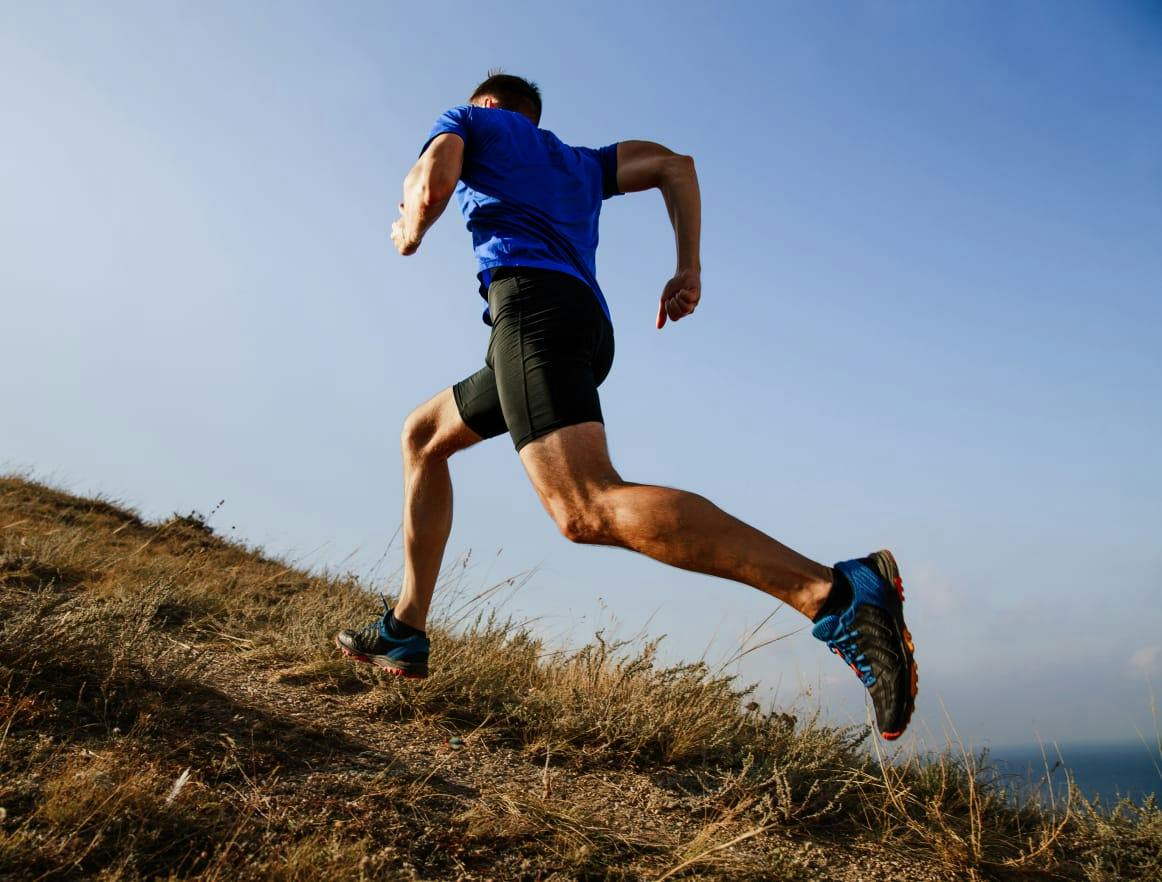
A man running up a hill

Your Surgery, Start to Finish

Your NanoKnee procedure is outpatient surgery performed with spinal anesthesia and sedation, which keep you relaxed and unaware without general anesthesia. Surgery generally takes about 90 minutes.

About 30 minutes later, your team will help you up, and most patients are on their way home within two hours. You can bend your new knee and put weight on it immediately.

Banner media

Your Recovery Timeline at Home

Your surgeon will give you a home exercise program to follow in place of clinic-based therapy, and progress tends to come in three phases:

  1. Days 7–14: finding your footing. Most patients are getting through the day on their own, managing personal care and light household chores.
  2. Weeks 2–4: gaining strength. As your exercises progress, moderate activity like longer walks and stationary biking becomes comfortable.
  3. Weeks 4–8: living actively. Most patients return to the active pursuits they had been missing, moving at the pace their surgeon recommends.

In one large review, about 85% of knee replacement patients got back to moderate-impact physical activity, with a median return of about four months.[4] Your NanoKnee surgeon will adjust your timeline to how your knee is healing.

Long-Term Care for Your New Knee

Activity is one of the best ways to protect your new knee. Good choices for recovery and long-term joint health include:

  • Walking
  • Biking
  • Water aerobics
  • Tai chi
  • Yoga
  • Tennis
  • Strengthening exercises

With healing behind you, most patients are free to enjoy their favorite sports and activities without restrictions.

Banner media

Knee Replacement Frequently Asked Questions

What's the average lifespan of a knee implant?

A well-placed knee implant can last for decades. When researchers combined national joint registry data in the largest analysis of its kind, roughly 82% of total knee replacements and 70% of partial knee replacements were still functioning 25 years after surgery.[5] Positioning the implant correctly is one of the factors that supports that kind of longevity.

Why does NanoKnee focus so much on implant position?

Because position and balance are among the factors a surgical team controls that influence how long a knee replacement lasts.[2] NanoKnee concentrates on those factors, combining precise 3D modeling and engineering with FDA-cleared implants to create a plan that places and aligns your implant to your anatomy.

How do I know if I qualify for NanoKnee?

You may qualify if you've been told you need a knee replacement and you want to heal at home, remain active, and have your implant planned around your own anatomy. NanoKnee was developed for active patients aiming for the highest level of function after surgery, from younger adults to older patients in good health. Your surgeon makes the final call at your consultation after reviewing your imaging, health, history and goals.

Is knee replacement a well-established, safe surgery?

Yes. It's one of the most frequently performed and carefully studied operations in the United States, and the American Joint Replacement Registry has logged more than 4.4 million hip and knee replacements since 2012.[6] Serious complications are uncommon, and some risks can be reduced by choices made before surgery. One of those choices is anesthesia. A national analysis of more than 380,000 joint replacements associated spinal (neuraxial) anesthesia with lower 30-day mortality and fewer in-hospital complications compared with general anesthesia.[7] NanoKnee procedures are performed under spinal anesthesia with sedation by board-certified orthopedic surgeons.

How is NanoKnee's alignment different from the usual method?

The usual method aligns every knee to the same neutral target, but many adults naturally have knees that aren't in “neutral” mechanical alignment.[10] NanoKnee instead uses restricted inverse kinematic alignment (iKA), which restores your natural tibial joint line and alignment within safe limits. In a matched series, iKA patients reported higher satisfaction and better Oxford Knee Scores at one year than patients aligned to an adjusted mechanical target.[11] Your plan is created from your CT scan before surgery and reviewed by your surgeon.

Could I need only part of my knee replaced?

If your arthritis is limited to one or two areas, yes. NanoKnee surgeons perform partial (unicompartmental) and bicompartmental knee replacements, which resurface only the damaged one-third or two-thirds of the joint and spare your ligaments and healthy bone. In a randomized trial of 528 patients with arthritis confined to the inner compartment, partial knee replacement achieved equivalent improvement with fewer complications.[12][13] Your NanoKnee surgeon will walk you through the best option for your anatomy and knee condition.

Is NanoKnee considered minimally invasive?

Yes. For arthritis in a single compartment, a Nano partial knee replacement is the least invasive option because it removes the least bone and preserves your ligaments.[12] In total knee replacement, the plan and the approach matter more than incision length. Our advanced 3D modeling allows NanoKnee surgeons to use a quadriceps-sparing approach for suitable candidates, reaching the joint without cutting the quadriceps tendon, an approach randomized trials show reduces pain in the first days after surgery.[8]

What anesthesia options are used for NanoKnee?

NanoKnee procedures use spinal (regional) anesthesia, a local anesthetic block and “twilight” sedation, so you're comfortable and unaware during surgery without general anesthesia. Spinal anesthesia was associated with lower 30-day mortality and fewer complications than general anesthesia in a national analysis of more than 380,000 joint replacements.[7] General anesthesia remains available for the occasional patient for whom it's safer.

Do NanoKnee patients stay in the hospital?

No. NanoKnee is outpatient surgery, and most patients go home from the surgery center about two hours afterward. In a meta-analysis of 20 studies, appropriately selected outpatients had complication and readmission rates comparable to inpatients.[9] Your surgeon will confirm in advance that same-day discharge fits your situation.

How long does NanoKnee surgery last?

Most NanoKnee procedures take around 90 minutes. Since the size, position and alignment of your implant have already been decided in your 3D plan, your surgeon makes fewer decisions under time pressure during the operation.

What's a realistic recovery schedule?

Most NanoKnee patients walk within 90 minutes of surgery and handle light activity in the first week. A realistic outline:

  • 7–14 days: routine tasks and self-care
  • 2–4 weeks: moderate activity
  • 4–8 weeks: a return to an active lifestyle
Your surgeon will tailor the pace to your recovery.

Do I need formal physical therapy?

Most NanoKnee patients don't. They recover with a surgeon-guided home exercise program, beginning with walking, isometrics and stretching right away and advancing to strengthening, biking, and activities like golf and hiking. You can log your progress and message your care team through the NanoKnee app.

What sports can I return to with a new knee?

Most NanoKnee patients return to the sports they love, such as golf, tennis, cycling, hiking, running and skiing.

Will I be able to fully straighten and bend my knee?

Most NanoKnee patients regain the motion they need for daily life and sports, and many recover range they had lost to years of arthritis. Your 3D plan balances your ligaments through the full range of motion to support a knee that straightens and bends fully. Across 720 NanoKnee patients in our recovery-unit records, the median knee flexion right after surgery was 125°, and half of patients measured between 120° and 134°.

What should I know about incision healing and scarring?

Incisions usually heal within two weeks, though the area should be protected for the first two to three months. Every NanoKnee procedure includes a cosmetic, plastic-surgical closure intended to minimize the appearance of your scar.

What risks should I discuss with my surgeon?

Knee replacement risks include infection, blood clots, stiffness, instability, implant loosening over time, and the risks of anesthesia. NanoKnee's surgical processes and proprietary 3D Blueprinting® address specific concerns: spinal anesthesia is associated with fewer perioperative complications than general anesthesia, [7] and pre-operative 3D planning targets the position and balance issues that are among the leading causes of early revision.[1] Your NanoKnee surgeon will discuss which risks apply to you.

Is it normal to notice numbness or clicking later on?

Yes. Some numbness near the incision and occasional clicking are common and usually nothing to worry about. Overall, most patients experience a steady return of function and relief from arthritis pain over the months after surgery, and your surgeon will follow your progress and address anything unexpected.

What costs should I plan for with NanoKnee?

Knee replacement is covered by Medicare and most commercial health plans when medically necessary, and NanoKnee surgery is billed as a knee replacement. The part to plan for is the pre-operative 3D planning and engineering, which insurance doesn't cover and which may cost up to $8,500 depending on your plan. Our patient navigators will confirm your coverage and costs before you commit, and financing is available for the non-covered portion.

Is there a best age for knee replacement?

There's no single right age. Knee replacement is routinely performed for older adults with advanced arthritis and can greatly improve mobility and quality of life, while younger, active patients may also be candidates. Your general health matters more than your age, and every NanoKnee patient is evaluated before surgery. NanoKnee's standard spinal anesthesia is associated with fewer perioperative complications than general anesthesia.[7]

Is NanoKnee a robotic or AI-driven surgery?

Neither. Your surgeon performs the procedure, and no robot is used in the operating room. AI only assists during planning, helping our biomedical engineers convert your CT scan into a 3D model that your surgeon reviews and approves. NanoKnee's precision comes from that pre-operative work, not operating room technology.

Sources

  1. Schroer WC, Berend KR, Lombardi AV, Barnes CL, Bolognesi MP, Berend ME, Ritter MA, Nunley RM. Why are total knees failing today? Etiology of total knee revision in 2010 and 2011. J Arthroplasty. 2013;28(8 Suppl):116-119. doi:10.1016/j.arth.2013.04.056
  2. Ritter MA, Davis KE, Meding JB, Pierson JL, Berend ME, Malinzak RA. The effect of alignment and BMI on failure of total knee replacement. J Bone Joint Surg Am. 2011;93(17):1588-1596. doi:10.2106/JBJS.J.00772
  3. Bourne RB, Chesworth BM, Davis AM, Mahomed NN, Charron KDJ. Patient satisfaction after total knee arthroplasty: who is satisfied and who is not? Clin Orthop Relat Res. 2010;468(1):57-63.
  4. Braz R, Gomes E, Valente C, Ahmed H, Moursy M, Delgado D, Sanchez M, Andrade R, Espregueira-Mendes J. High rate of return to low-impact physical activity or sports after total and unicompartmental knee arthroplasty: a systematic review with meta-analysis. Knee Surg Sports Traumatol Arthrosc. 2026. doi:10.1002/ksa.70267
  5. Evans JT, Walker RW, Evans JP, Blom AW, Sayers A, Whitehouse MR. How long does a knee replacement last? A systematic review and meta-analysis of case series and national registry reports with more than 15 years of follow-up. Lancet. 2019;393(10172):655-663. doi:10.1016/S0140-6736(18)32531-5
  6. American Academy of Orthopaedic Surgeons. American Joint Replacement Registry (AJRR): 2025 Annual Report. Rosemont, IL: AAOS; 2025.
  7. Memtsoudis SG, Sun X, Chiu YL, Stundner O, Liu SS, Banerjee S, Mazumdar M, Sharrock NE. Perioperative comparative effectiveness of anesthetic technique in orthopedic patients. Anesthesiology. 2013;118(5):1046-1058. doi:10.1097/ALN.0b013e318286061d
  8. Berstock JR, Murray JR, Whitehouse MR, Blom AW, Beswick AD. Medial subvastus versus the medial parapatellar approach for total knee replacement: a systematic review and meta-analysis of randomized controlled trials. EFORT Open Rev. 2018;3(3):78-84. doi:10.1302/2058-5241.3.170030
  9. Gong S, Yi Y, Wang R, Han L, Gong T, Wang Y, Shao W, Feng Y, Xu W. Outpatient total knee and hip arthroplasty present comparable and even better clinical outcomes than inpatient operation. Front Surg. 2022;9:833275. doi:10.3389/fsurg.2022.833275
  10. Bellemans J, Colyn W, Vandenneucker H, Victor J. The Chitranjan Ranawat Award: is neutral mechanical alignment normal for all patients? The concept of constitutional varus. Clin Orthop Relat Res. 2012;470(1):45-53.
  11. Winnock de Grave P, Luyckx T, Claeys K, Tampere T, Kellens J, Müller J, Gunst P. Higher satisfaction after total knee arthroplasty using restricted inverse kinematic alignment compared to adjusted mechanical alignment. Knee Surg Sports Traumatol Arthrosc. 2022;30(2):488-499. doi:10.1007/s00167-020-06165-4
  12. Beard DJ, Davies LJ, Cook JA, MacLennan G, Price A, Kent S, Hudson J, Carr A, Leal J, Campbell H, Fitzpatrick R, Arden N, Murray D, Campbell MK; TOPKAT Study Group. The clinical and cost-effectiveness of total versus partial knee replacement in patients with medial compartment osteoarthritis (TOPKAT): 5-year outcomes of a randomised controlled trial. Lancet. 2019;394(10200):746-756. doi:10.1016/S0140-6736(19)31281-4
  13. Beard DJ, Davies LJ, Cook JA, MacLennan G, Hudson J, Price AJ, Carr AJ, Little M, Leal J, Fitzpatrick R, Murray DW, Campbell MK; TOPKAT Study Group. Assessing clinical and cost effectiveness of total versus partial knee replacement (TOPKAT): 10-year follow-up of a multicentre, randomised controlled trial. Lancet Rheumatol. 2026;8(2):e116-e126. doi:10.1016/S2665-9913(25)00250-4
  14. Witjes S, Gouttebarge V, Kuijer PPFM, van Geenen RCI, Poolman RW, Kerkhoffs GMMJ. Return to sports and physical activity after total and unicondylar knee arthroplasty: a systematic review and meta-analysis. Sports Med. 2016;46(2):269-292. doi:10.1007/s40279-015-0421-9
  15. Chua MJ, Hart AJ, Mittal R, Harris IA, Xuan W, Naylor JM. Early mobilisation after total hip or knee arthroplasty: a multicentre prospective observational study. PLoS One. 2017;12(6):e0179820. doi:10.1371/journal.pone.0179820
Banner media
Text Us
Hi there, have a question? Text us here.

Enter your information, and our team will text you shortly.

This field is required.
Send

This site is protected by reCAPTCHA and the Google Privacy Policy(opens in a new tab) and Terms of Service(opens in a new tab) apply.

Find your Knee Surgeon Your comeback starts here

Schedule a Consultation
Contact us media
Accessibility: If you are vision-impaired or have some other impairment covered by the Americans with Disabilities Act or a similar law, and you wish to discuss potential accommodations related to using this website, please contact our Accessibility Manager at (740) 675-8061.
Contact Us