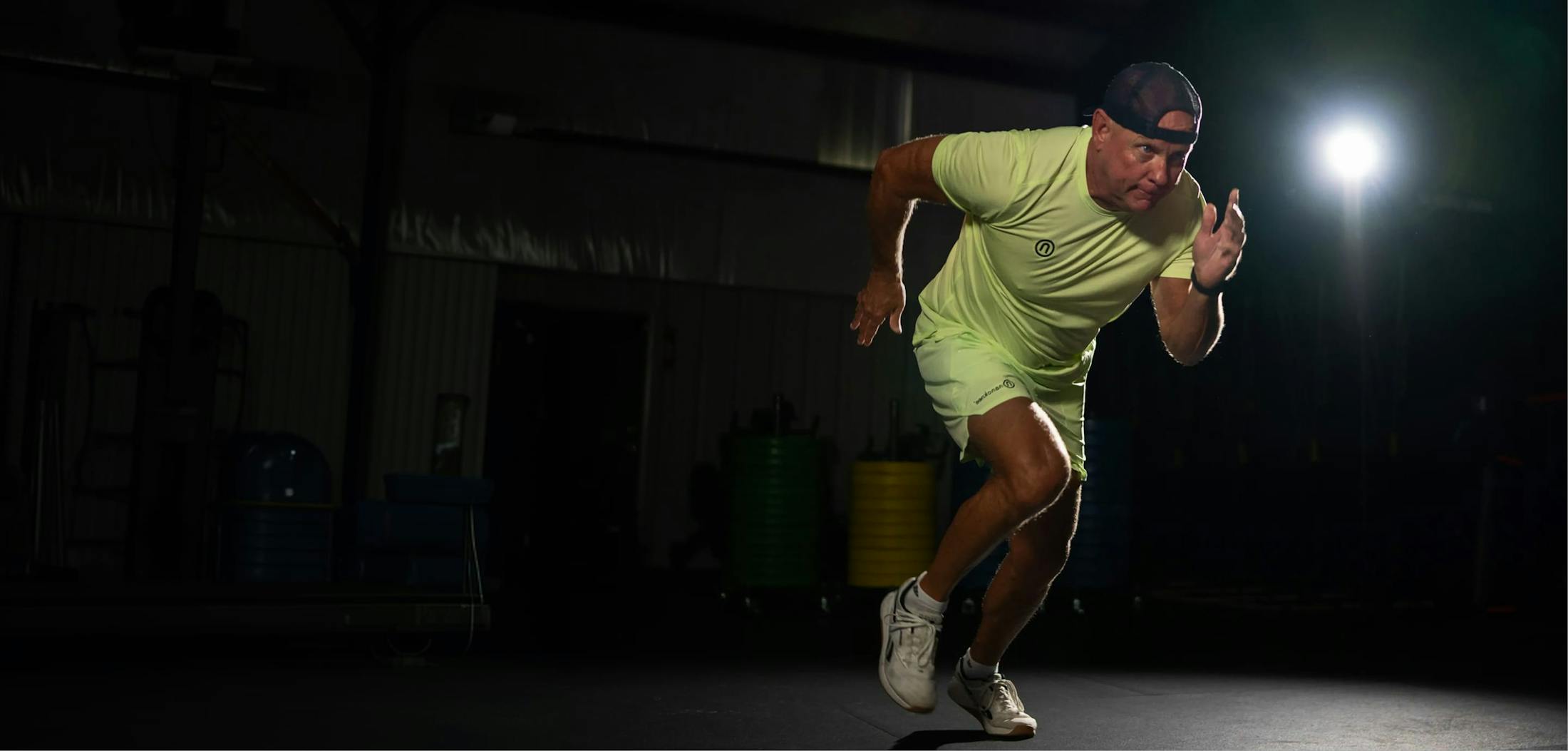


You can recover from knee replacement with a home exercise program by following a structured, surgeon-guided routine of walking, stretching, and strengthening, with regular check-ins from your care team. For appropriately selected patients, randomized trials show that this approach yields results comparable to those of formal outpatient physical therapy. Most NanoKnee® patients recover this way after knee replacement in Los Angeles and across our network.
NanoKnee founder and medical director Dr. Thomas Ferro is a board-certified, fellowship-trained orthopedic surgeon with more than 30 years of experience. Our network of 14 independent, board-certified partner surgeons has performed more than 12,600 knee replacements. In this blog, we explain how a home program works, what the research says, and what a typical recovery timeline looks like.
What Is a Home Exercise Program After Knee Replacement?
After knee replacement, a home exercise program allows you to complete your rehabilitation at home rather than at a physical therapy clinic. Your NanoKnee surgeon gives you a set of exercises that get more challenging as your knee heals, and adjusts it based on your progress at follow-up visits and in the NanoKnee app.
A typical NanoKnee home program includes:
- Walking from the day of surgery, gradually increasing distance and reducing reliance on a walker or cane
- Isometric exercises that activate the quadriceps and hamstrings without straining the healing joint
- Stretching and range-of-motion work to restore full bending and straightening
- Progressive strengthening as the incision heals and your stability improves
- Stationary biking and other low-impact conditioning in the weeks that follow
- Progress tracking in the NanoKnee app, where you log milestones and message your care team directly
Support does not disappear when you leave the surgery center. Depending on your surgeon and location, NanoKnee aftercare can include at-home nurses and physical therapists, so you recover without a rehabilitation facility.
Does a Home Exercise Program Work as Well as Outpatient Physical Therapy?
Yes, for appropriately selected patients, a home exercise program works as well as formal outpatient physical therapy. Randomized trials have tested this question directly and found no meaningful advantage of routine supervised sessions.
Key findings from the research include:
- Comparable knee bending: In a randomized trial of 290 patients with knee replacements published in Clinical Orthopaedics and Related Research, knee flexion recovery with unsupervised home exercise was noninferior to outpatient physical therapy.
- Same return to daily life: Patients in that trial showed no difference in patient-reported function or in time to return to work, driving, and walking without an assistive device.
- Consistent results across trials: A 2023 meta-analysis in Cureus pooled data from 11 randomized trials involving 1,884 knee replacements. Supervised therapy did not yield clinically significant improvements in strength, range of motion, or quality of life compared with home exercise.
- A shift in standard practice: The meta-analysis authors concluded that routine supervised therapy may not be warranted for most patients.
Why NanoKnee Patients Are Prepared to Recover at Home
NanoKnee patients are prepared to recover at home because the surgery itself is designed for early movement. When you can walk and bend your knee within hours, a home program builds on progress that has already started.
Several parts of the NanoKnee process support that early start:
- Nano 3D Blueprinting®: Biomedical engineers build a 3D model from your CT scan, then size, position, and align your implant before surgery. Ligament balance is mapped through your full range of motion, and your surgeon approves the plan.
- Personalized alignment: The plan restores the joint line your knee had before arthritis rather than forcing every knee to the same neutral target.
- A muscle-sparing approach: For appropriate candidates, NanoKnee surgeons use a subvastus approach that avoids cutting the quadriceps tendon. A meta-analysis of randomized trials in EFORT Open Reviews linked this approach to less pain in the first days after surgery.
- Spinal anesthesia with sedation: Instead of general anesthesia, which helps you get up sooner.
The results show up in NanoKnee's own recovery records. Across 876 patients, the median time from surgery to first walk was 65 minutes, and 96% were walking within two hours. Median knee flexion in the recovery unit was 125° across 720 patients. Individual results vary, but most patients leave for home already moving well.
What Does a Home Recovery Timeline Look Like After Knee Replacement?
A home recovery timeline after knee replacement typically moves from routine daily activity in the first two weeks to an active lifestyle by about two months. Your NanoKnee surgeon sets the pace, and individual timelines vary.
- Day of surgery. Walking within hours, with your knee able to bear weight and bend immediately. Most patients go home about two hours after surgery.
- Days 7 to 14. Most patients handle everyday tasks around the house and start getting out on their own again. The incision is generally healed within two weeks.
- Weeks 2 to 4. Moderate activity returns, including longer walks, stationary biking, and more demanding strengthening exercises.
- Weeks 4 to 8. Most patients return to the active lifestyle they planned, such as golf, hiking, and cycling, once cleared by their surgeon.
Published research supports a full return to activity over the following months. A 2026 systematic review in Knee Surgery, Sports Traumatology, Arthroscopy found that about 85% of knee replacement patients return to moderate-impact physical activity at a median of about 4 months.
What Exercises Are Included in a Home Program for Knee Replacement?
A home program for knee replacement combines muscle activation, range-of-motion work, and gradual strengthening, introduced in stages as your knee heals. The American Academy of Orthopaedic Surgeons (AAOS) notes that surgeons may recommend 20 to 30 minutes of exercise daily during early recovery.
In the first few weeks, exercises focus on waking up the muscles around the knee and restoring range of motion. Common early exercises include:
- Quadriceps sets, which tighten the thigh muscle while your leg rests straight
- Straight-leg raises, which build strength without bending the knee
- Ankle pumps, which keep blood moving in your lower leg
- Heel slides, which gently increase how far your knee bends
- Short, frequent walks around the house
As strength improves, your NanoKnee surgeon will add standing exercises, step-ups, longer walks, and stationary biking. Later stages build toward the activities you care about most, whether that means a round of golf or a hike in the hills above Los Angeles. Because your surgeon tailors repetitions and progression to your knee, follow your own program rather than a generic one.
How Do You Stay on Track Without Supervised Therapy Sessions?
Staying on track without supervised sessions comes down to consistency, clear milestones, and easy access to your care team. Patients who treat their home program like a scheduled appointment tend to progress steadily.
These habits help most NanoKnee patients stay on pace:
- Set fixed exercise times each day so sessions do not slip as you feel better.
- Log your progress in the NanoKnee app, including flexion, walking distance, and pain levels, so your care team can spot problems early.
- Manage swelling with elevation and icing as your surgeon directs, since swelling can limit how far your knee bends.
- Take pain medication as prescribed so you can complete each session, especially after the nerve block wears off.
- Message your care team when something feels off rather than waiting for your next visit.
Rest matters as much as effort. Pushing too hard in the first two weeks can increase swelling and set you back, so follow the progression your surgeon lays out.
When Is Formal Physical Therapy Still Recommended After Knee Replacement?
Formal physical therapy is still recommended after knee replacement when recovery falls behind expected milestones or when your health history calls for closer supervision. A home program is the starting point for most NanoKnee patients, not a rule for everyone.
Knee flexion is one of the clearest signals. In the Clinical Orthopaedics and Related Research trial, home exercise patients were moved to outpatient therapy if they had not reached 70° of flexion at two weeks or 90° at four weeks. Your NanoKnee surgeon tracks similar benchmarks through follow-up visits and the app.
Other situations where supervised therapy may help include limited motion before surgery, problems in another joint, a revision procedure, or difficulty completing exercises safely alone. When your surgeon recommends formal therapy, the NanoKnee team arranges it as part of your recovery plan.
Questions About Recovering at Home? Dr. Ferro and the NanoKnee Team Can Answer Them All
Recovering from knee replacement at home is a realistic goal for most patients when surgery is planned for early movement and supported by a structured program. NanoKnee combines Nano 3D Blueprinting®, a muscle-sparing approach, with spinal anesthesia, so you can start your home program already on your feet.
Founded by Dr. Thomas Ferro, a board-certified, fellowship-trained orthopedic surgeon with more than 30 years of experience, NanoKnee brings this approach to patients across Southern California. Partner surgeons offer knee replacement in Los Angeles, West Los Angeles, Beverly Hills, Burbank, Downey, and Torrance. If you are considering knee replacement in Los Angeles, call (888) 492-0598 or contact NanoKnee to schedule a consultation.
Disclaimer: This information is provided for educational purposes only and does not replace a consultation with a board-certified orthopedic surgeon. Outcomes, risks, recovery timelines, and suitability for a home exercise program vary from patient to patient.
Sources
- Fleischman AN, Crizer MP, Tarabichi M, et al. 2018 John N. Insall Award: Recovery of knee flexion with unsupervised home exercise is not inferior to outpatient physical therapy after TKA: a randomized trial. Clin Orthop Relat Res. 2019;477(1):60-69. doi:10.1097/CORR.0000000000000561
- Not all patients need supervised physical therapy after primary total knee arthroplasty: a systematic review and meta-analysis. Cureus. 2023. doi:10.7759/cureus.35232
- Berstock JR, Murray JR, Whitehouse MR, Blom AW, Beswick AD. Medial subvastus versus the medial parapatellar approach for total knee replacement: a systematic review and meta-analysis of randomized controlled trials. EFORT Open Rev. 2018;3(3):78-84. PubMed
- Braz R, Gomes E, Valente C, et al. High rate of return to low-impact physical activity or sports after total and unicompartmental knee arthroplasty: a systematic review with meta-analysis. Knee Surg Sports Traumatol Arthrosc. 2026. doi:10.1002/ksa.70267
- American Academy of Orthopaedic Surgeons. Total Knee Replacement Exercise Guide. OrthoInfo. orthoinfo.aaos.org